S005-ARGENTINA APROBACION PRESUPUESTO 2026
STORY: Argentina's Congress passed the 2026 budget on Friday (December 26), the first approved by legislators since President Javier Milei took office in late 2023.
The budget, passed 46 votes to 25 with one abstention, includes spending of $102 billion (148 billion Argentine pesos) and projects South America's second-biggest economy will grow 5% with inflation at 10.1%. The bill projects a primary budget surplus equivalent to 1.2% of the gross domestic product.
The 2023 budget was the last one passed by Congress. During the first two years of his term, Milei's government had extended the budget of the previous year without passing a bill in Congress, resulting in sectors being dramatically hit by inflation, which hit an annual rate of almost 300% in April 2024.
According to a report by the Civil Association for Equality and Justice, a Buenos Aires-based think tank, the new budget reflects a 7% increase in real terms from 2025 but a 24.6% drop in real terms compared to the 2023 Congress-approved budget. However, the think tank noted that some inflation projections are significantly higher than the executive branch's forecast.
DESCRIPCIÓN DE IMÁGENES
SHOWS: BUENOS AIRES, ARGENTINA (DECEMBER 26, 2025) (SENADO TV HANDOUT - Access all)
1. (MUTE) SENATE CHAMBER DURING 2026 BUDGET DEBATE
2. SENATE PRESIDENT AND VICE PRESIDENT OF ARGENTINA, VICTORIA VILLARRUEL, ANNOUNCING GENERAL VOTE ON 2026 BUDGET BILL
3. SCREEN SHOWING VOTING RESULTS: IN FAVOR: 46 / AGAINST: 25 / ABSTENTIONS: 1
4. SENATORS FROM THE RULING PARTY CELEBRATING APPROVAL OF THE BUDGET
5. (SOUNDBITE) (Spanish) RULING PARTY LA LIBERTAD AVANZA SENATOR, PATRICIA BULLRICH, SAYING:
"This budget expresses the economic direction that Argentine society chose by electing President Milei, but above all, Madam President, this is a budget that doesn't improvise, doesn't deceive, doesn't deceive. Let's not add one more little number just because... later we don't cover it, we under-execute. It doesn't promise what cannot be fulfilled, it doesn't lie to the people."
6. PROVISIONAL PRESIDENT OF SENATE, BARTOLOME ABDALA, GIVING THE FLOOR TO SENATOR
7. (SOUNDBITE) (Spanish) SENATOR OF THE JUSTICIALIST PARTY, ALSO KNOWN AS THE PERONIST PARTY, DANIEL BENSUSAN, SAYING:
"This budget, as clarified by the previous senator, is totally unviable. Unviable due to the macroeconomic projections it foresees, inconsistent in the expected rate, the exchange rate, and the GDP projection, where consumption decreases, and where industry falls. It's a budget, as Senator Atauche (Ezequiel Atauche) said, according to them, with a fiscal balance, but a totally fictitious one. Why? Because it's a fiscal balance with federal imbalance, with social imbalance. The sustained growth they say it has, without consumption, there is no possibility of growth. In Argentina today, consumption is at its worst levels."
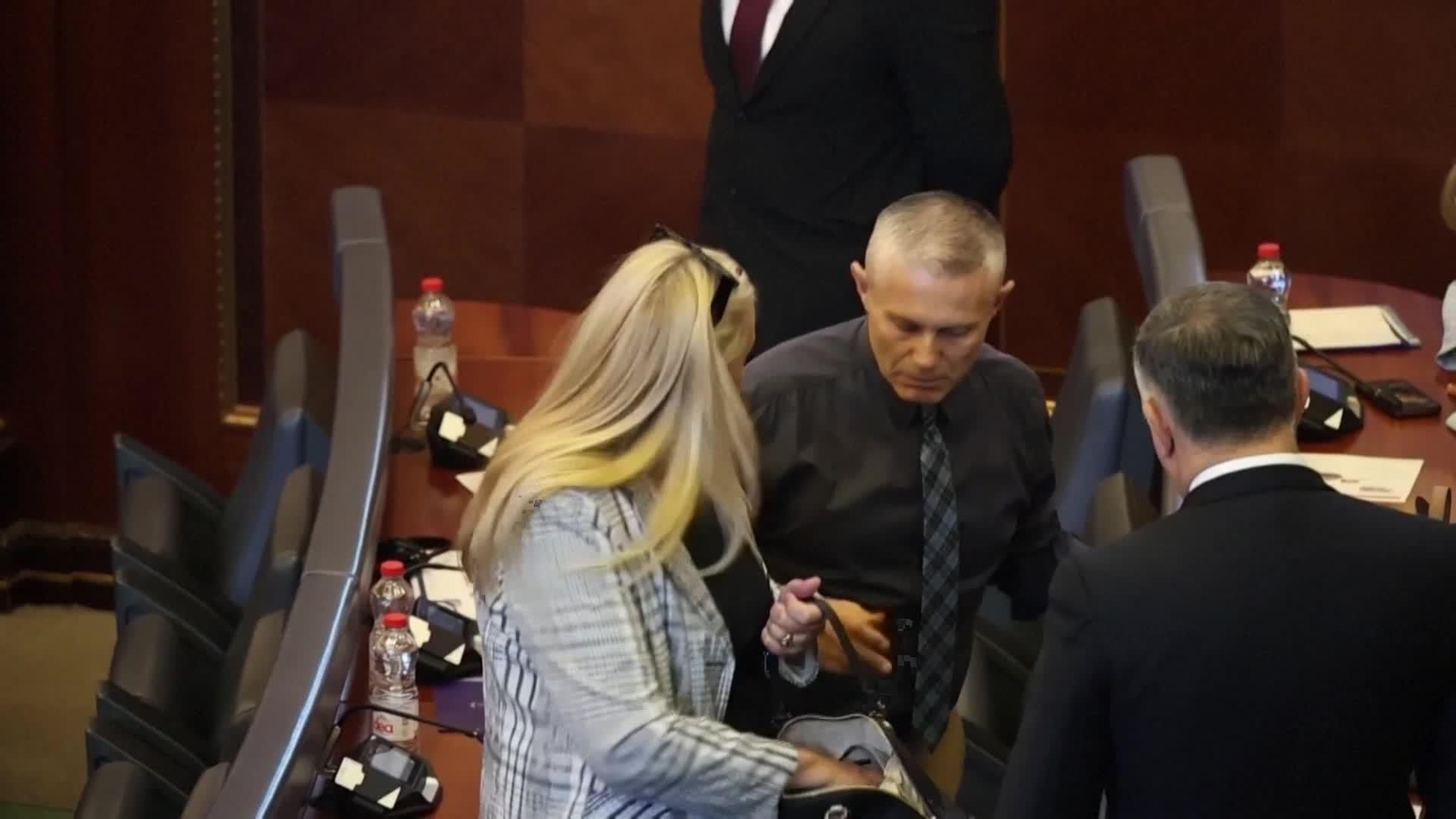
8. SENATE CHAMBER DURING DEBATE
9. (SOUNDBITE) (Spanish) SENATOR FROM INDEPENDENCIA BLOCK, BEATRIZ AVILA, SAYING:
"Approving this budget means choosing planning over improvisation, it means choosing transparency over opacity, and it means choosing development over stagnation. People are waiting for answers from us. We have no excuses; we need the budget. It's better than not having one, because not having one would mean that we would continue with discretionary management of public funds and we cannot allow that."
10. ABDALA GIVING THE FLOOR TO SENATOR
11. (SOUNDBITE) (Spanish) SENATOR FROM UNION CIVICA RADICAL PARTY, MAXIMILIANO ABAD, SAYING (PLEASE NOTE SOUNDBITE PARTIALLY OVERLAYS SHOT 12):
"For the national government, the models to follow are the United States and Israel. The United States invests 3.45% of its GDP in science, while Israel invests more than 5%. I often ask myself these days, how are we going to reach those horizons, how are we going to be like those countries? I want to tell you something, Mr. President, for me Article 30, I call it the broom article, because it's an article that sweeps the floors of education, but also the investment projections established by education and science laws in Argentina."
12. SENATORS LISTENING
13. (MUTE) SENATE CHAMBER DURING DEBATE