S005-ARCHIVO CRONOLOGIA RELACIONES EEUU E IRAN 1951 A 2026
STORY: Following is a chronology of major events in relations between the Iran and the United States:
1953 - The CIA helps orchestrate overthrow of Iran’s popular Prime Minister Mohammed Mossadegh, restoring to power Shah Mohammed Reza Pahlavi.
1957 - The U.S. and Iran sign an agreement on civil nuclear cooperation.
1967 - The U.S. provides Iran with a nuclear reactor along with weapons-grade 93 percent enriched uranium fuel.
1968 - Iran signs the Nuclear Non-Proliferation Treaty which permits it to have a civil nuclear program in return for a commitment not to acquire nuclear weapons.
1979 - Iran’s Islamic Revolution forces U.S.-backed shah to flee, Ayatollah Ruhollah Khomeini returns from exile and becomes supreme religious guide. Fundamentalist students seize the U.S. Embassy in Tehran and hold staff hostage.
1980 - The U.S. cuts diplomatic ties with Iran, seizes Iranian assets and bans most trade with it; hostage rescue mission ordered by President Jimmy Carter fails.
1981 - Iran releases 52 U.S. hostages minutes after Carter steps down and Ronald Reagan is inaugurated as U.S. president.
1984 - U.S. lists Iran as a state sponsor of terrorism.
1986 - Reagan reveals secret arms deal with Tehran in violation of U.S. arms embargo.
1988 - U.S. warship Vincennes mistakenly shoots down Iranian passenger plane over the Gulf, killing all 290 aboard.
2002 - President George W. Bush declares Iran, Iraq, North Korea an "axis of evil." U.S. officials accuse Tehran of operating secret nuclear weapons program.
2009 - Britain, France and the United States announce that Iran is building a secret uranium-enrichment site at Fordow.
2012 - U.S. law gives President Barack Obama the power to sanction foreign banks if they fail to significantly reduce imports of Iranian oil. Iranian oil sales drop, sparking an economic downturn.
U.S. and Iranian officials begin secret talks, which intensify in 2013, on the nuclear issue.
2013 - Hassan Rouhani is elected Iran’s president on a platform of improving Iran’s relations with the world and its economy.
2015 - Iran and six major powers reach a nuclear agreement, under which Tehran agrees to curb its nuclear work in return for sanctions relief.
2018 - President Donald Trump withdraws from the nuclear deal in May, and reimposes crippling economic sanctions on Iran.
2019 - In April, the U.S. designates the Islamic Revolutionary Guard Corps a "terrorist organization".
In May, Iran says it will increase enriched uranium production, bucking its commitments under the nuclear accord.
In September, Saudi Arabia’s state-run oil company is attacked by drones and missiles believed to be from Iran; Tehran denies involvement.
2020 - Iran vows harsh revenge after a U.S. air strike in Baghdad kills special forces commander Qassem Soleimani, architect of Iran's military influence in the Middle East.
2021 - U.S. and Iranian officials hold six rounds of indirect nuclear talks in Vienna between April and June. A new round begins on Nov. 29 after a five-month hiatus triggered by the election of Iran's hardline president Ebrahim Raisi.
2022 - Indirect talks between Tehran and Washington stall in September, leading both sides to sketch out steps that could free some detained U.S. citizens and unfreeze some Iranian assets abroad.
2023 - In August, Iran and the United States agree a prisoner swap and the unfreezing of $6 billion of Iranian assets in South Korea.
2025 - Ahead of his meeting with Israeli Prime Minister Benjamin Netanyahu, Trump signs presidential memorandum reimposing Washington's tough policy on Iran that was practiced throughout his first term. Iran's Supreme Leader Ayatollah Ali Khamenei rejects U.S. President Donald Trump's demand for unconditional surrender. On June 21, Donald Trump said the U.S. stuck three Iranian nuclear sites, joining Israel's air campaign that began on June 13.
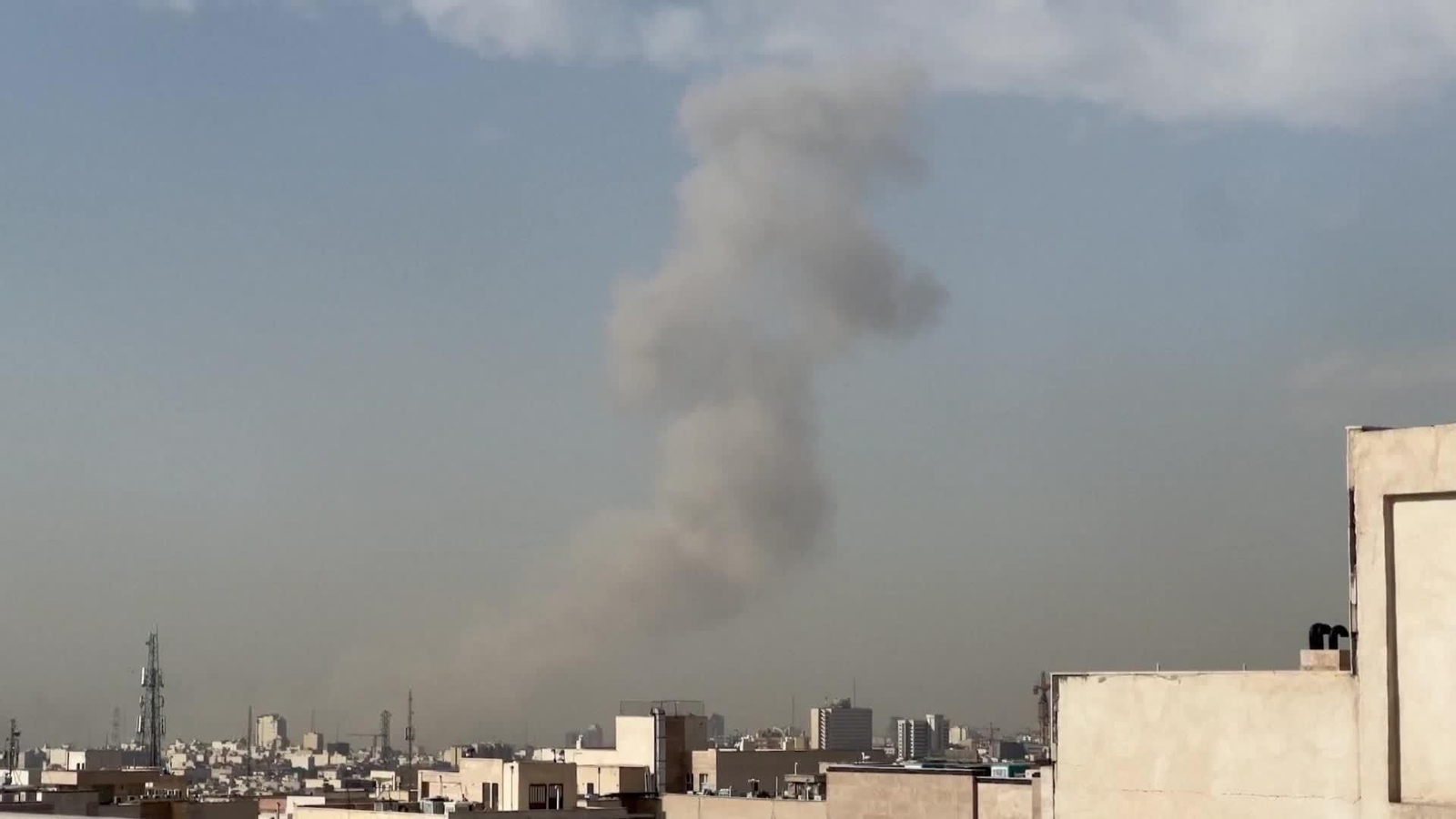
2026 - U.S. and Israeli launched strikes on Iran on February 28, plunging the Middle East into a renewed military confrontation and further dimming hopes for a diplomatic solution to Tehran's nuclear dispute with the West.
DESCRIPCIÓN DE IMÁGENES
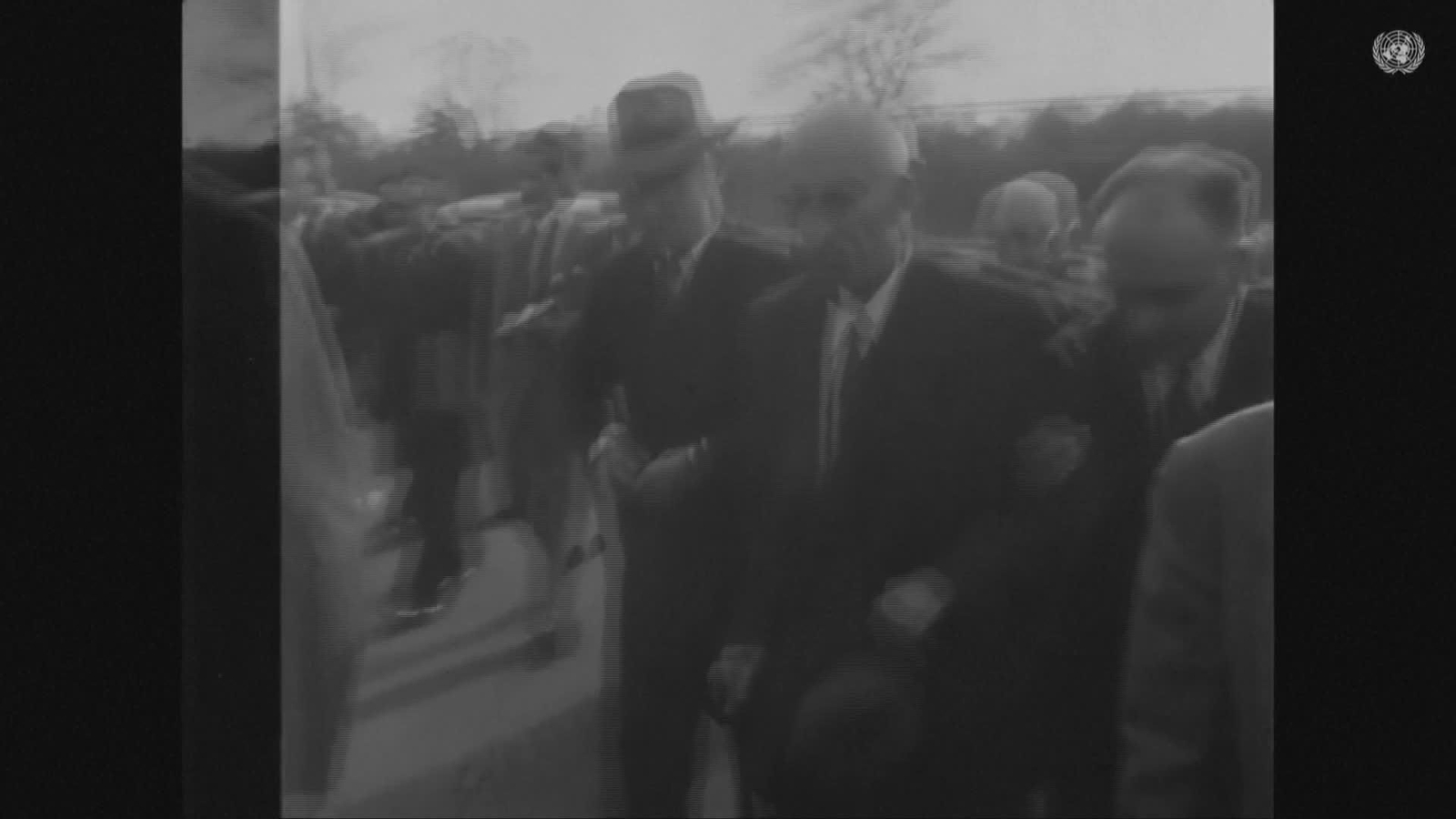
SHOWS: The U.S. and UK orchestrated a coup to overthrow Iran’s democratically elected Prime Minister Mohammad Mossadegh after he nationalised the oil industry. This restored the Shah to power and sowed deep mistrust.
NEW YORK CITY, NEW YORK, UNITED STATES (FILE - OCTOBER 16, 1951) (ORIGINALLY 4:3) (UNTV - Access all) (MONOCHROME)
1. THEN IRANIAN PRIME MINISTER, MOHAMMAD MOSSADEGH, ARRIVING AT UNITED NATIONS SECURITY COUNCIL MEETING (MUTE)
2. MOSADDEGH SEATED AT MEETING (MUTE)
3. VARIOUS OF MOSADDEGH SPEAKING AT MEETING
The CIA helped orchestrate the overthrow of Iran's popular Prime Minister Mohammed Mossadegh, restoring to power the Shah, Mohammed Reza Pahlavi.
TEHRAN, IRAN (FILE - 1953) (ORIGINALLY 4:3) (REUTERS ARCHIVE - No use Iran International. No use BBC Persian. No use Manoto. No use VOA Persian) (MONOCHROME)
4. STATUE OF SHAH'S FATHER BEING PULLED DOWN
5. PICTURE OF SHAH
Shah of Iran marries his third wife Farah Diba.
TEHRAN, IRAN (FILE - DECEMBER 1959) (ORIGINALLY 4:3) (REUTERS ARCHIVE- No use Iran International. No use BBC Persian. No use Manoto. No use VOA Persian)
6. SHAH AT WEDDING CEREMONY WITH THIRD WIFE, FARAH DIBA
Shah called for parliamentary elections in 1961, after annulling elections the previous year.
TEHRAN, IRAN (FILE - 1961) (ORIGINALLY 4:3) (REUTERS ARCHIVE - No use Iran International. No use BBC Persian. No use Manoto. No use VOA Persian)
7. SHAH ON PODIUM SURROUNDED BY LARGE CHEERING CROWD
The Shah held a coronation ceremony where he crowned himself.
TEHRAN, IRAN (FILE - OCTOBER 26, 1967) (ORIGINALLY 4:3) (REUTERS ARCHIVE - No use Iran International. No use BBC Persian. No use Manoto. No use VOA Persian) (MUTE)
8. SHAH CROWNING HIMSELF AT CORONATION CEREMONY IN THE GRAND HALL OF GOLESTAN PALACE
Mounting discontent over the Shah's authoritarian rule led to rioting throughout late 1978, forcing the Shah to leave Iran in January 1979.
TEHRAN, IRAN (FILE - NOVEMBER 4 AND 5, 1978) (ORIGINALLY 4:3) (REUTERS ARCHIVE - No use Iran International. No use BBC Persian. No use Manoto. No use VOA Persian)
9. STUDENTS AT UNIVERSITY GATE CHANTING / TROOPS
10. SOLDIER FIRING TEAR GAS GRENADE/ STUDENTS RUNNING AND KICKING AWAY TEAR GAS CANISTER
11. DEMONSTRATORS RUNNING / FIRE BURNING IN STREET
12. MAN THROWING PORTRAIT OF SHAH FROM WINDOW
13. PORTRAIT OF SHAH BURNING
The Shah and the Empress left Tehran on January 16, 1979 under extremely tight security. The Shah was flown from the Royal Palace by helicopter to Mehrabad Airport to board a plane which took them to Egypt.
TEHRAN, IRAN (FILE - JANUARY 16, 1979) (ORIGINALLY 4:3) (REUTERS - No use Iran International. No use BBC Persian. No use Manoto. No use VOA Persian)
14. GUARDS AT AIRPORT GATES/AIRCRAFT TAIL SEEN MOVING PAST BUILDINGS
15. TROOPS FIRING INTO AIR AND CROWD DISPERSING IN TEHRAN
16. VARIOUS OF TROOPS RUNNING/DEMONSTRATORS CHANTING AND WAVING
Ayatollah Ruhollah Khomeini returned to Tehran from Paris after 15 years of exile spent mainly in Iraq and becomes supreme religious guide.
IN AIR (FILE - FEBRUARY 1, 1979) (ORIGINALLY 4:3) (REUTERS - No use Iran International. No use BBC Persian. No use Manoto. No use VOA Persian)
17. AYATOLLAH KHOMEINI SITTING ON PLANE
TEHRAN, IRAN (FILE - FEBRUARY 1, 1979) (ORIGINALLY 4:3) (REUTERS - No use Iran International. No use BBC Persian. No use Manoto. No use VOA Persian)
18. ARMED GUARDS AT AIRPORT
19. AYATOLLAH KHOMEINI WALKING DOWN AIRCRAFT STEPS
20. LARGE CROWDS SURROUNDING KHOMEINI'S CAR/MEN SITTING ON ROOF
21. HUGE CROWDS AROUND KHOMEINI'S CONVOY CARRYING LARGE POSTER OF KHOMEINI AND BALLOONS
The Ayatollah was received by more than one hundred thousand people who flocked to the Islamic School in Central Tehran on February 2, 1979 to welcome him and pledge their support.
TEHRAN, IRAN (FILE - FEBRUARY 2, 1979) (ORIGINALLY 4:3) (REUTERS - No use Iran International. No use BBC Persian. No use Manoto. No use VOA Persian)
22. AYATOLLAH KHOMEINI GESTURING AT CROWD BELOW, CROWD CHANTING AND WAVING
Iranian students seized the U.S. embassy in Tehran and captured 90 hostages; 52 are held captive for 444 days, causing a lasting rupture in U.S.-Iran relations.
TEHRAN, IRAN (FILE - NOVEMBER 6, 1979) (ORIGINALLY 4:3) (REUTERS - No use Iran International. No use BBC Persian. No use Manoto. No use VOA Persian)
23. UNITED STATES FLAG BEING BURNED / STUDENTS DEMONSTRATING OUTSIDE U.S. EMBASSY IN TEHRAN
24. STUDENTS HOLDING "DOWN WITH U.S.A." BANNER AND PICTURES OF THE AYATOLLAH KHOMEINI
25. STUDENTS CHANTING
26. VARIOUS OF STUDENTS HOLDING FLAG WITH PICTURE OF AYATOLLAH KHOMEINI AND PALESTINIAN LEADER YASSER ARAFAT
TEHRAN, IRAN (FILE - NOVEMBER 6, 1979) (ORIGINALLY 4:3) (REUTERS - No use Iran International. No use BBC Persian. No use Manoto. No use VOA Persian)
27. GIANT POSTER OF AYATOLLAH KHOMEINI AND CROWD OUTSIDE OCCUPIED U.S. EMBASSY COMPOUND
TEHRAN, IRAN (FILE - NOVEMBER 8, 1979) (ORIGINALLY 4:3)(REUTERS - No use Iran International. No use BBC Persian. No use Manoto. No use VOA Persian)
28. BLINDFOLDED AMERICAN HOSTAGES BEING PARADED IN EMBASSY COMPOUND BY MILITANT STUDENTS
By April 1980, U.S. President Jimmy Carter broke off diplomatic ties with Iran over the hostage crisis.
WASHINGTON D.C., UNITED STATES (FILE - NOVEMBER 15, 1979) (ORIGINALLY 4:3) (REUTERS ARCHIVE - No use Iran International. No use BBC Persian. No use Manoto. No use VOA Persian)
29. (SOUNDBITE) (English) THEN U.S. PRESIDENT JIMMY CARTER, SAYING:
"No act has so galvanised the American public towards unity in the last decade as has the holding of our people as hostages in Tehran. We stand today as one people."
MARYLAND, UNITED STATES (FILE - JANUARY 20, 1981) (NBC - Broadcasters: No use USA. No use VOA. No use CNN. Digital: No use Digital) (SHOTS OVERLAID BY NARRATION)
30. VARIOUS OF EX-HOSTAGES COMING DOWN STEPS AS PEOPLE CHEER
31. VARIOUS OF EX-HOSTAGES GREETING FAMILY / BEING LIFTED BY CROWD
In July 1998, Iran Air flight 655 which was en route from Bandar Abbas to Dubai was shot down by a U.S. warship off the coast of Iran, killing all 290 onboard.
The U.S. Navy said it had mistaken the Airbus A300 for a hostile Iranian Air Force F-14 fighter jet.
BANDAR ABBAS, IRAN (FILE - JULY 7, 1988) (REUTERS - No use Iran International. No use BBC Persian. No use Manoto. No use VOA Persian)
32. VARIOUS OF DEBRIS FROM IRANIAN AIRLINER WITH PHOTOGRAPHERS TAKING PICTURES
33. VARIOUS OF BODIES OF PASSENGERS ABOARD CRASHED IRAN AIR FLIGHT 655 LYING IN PLASTIC BAGS INSIDE MAKESHIFT MORTUARY, AS WORKER CHECKS THEM
Then U.S. President George W. Bush said during his State of the Union address on January 29, 2002, that Iran "aggressively pursues" weapons and "exports terror".
WASHINGTON D.C., UNITED STATES (FILE - JANUARY 29, 2002) (WHITE HOUSE ARCHIVES - Access all)
34. (SOUNDBITE) (English) THEN U.S. PRESIDENT GEORGE W. BUSH SAYING:
"Iran aggressively pursues these weapons and exports terror while an unelected few repress the Iranian people's hope for freedom."
Iran is believed to have a nuclear programme that is spread over many locations.
Natanz is home to a complex at the heart of Iran's enrichment programme on a plain abutting mountains outside the Shi'ite Muslim holy city of Qom, south of Tehran. Natanz houses facilities including two enrichment plants: the vast, underground Fuel Enrichment Plant and the above-ground Pilot Fuel Enrichment Plant.
NATANZ, IRAN (FILE) (ORIGINALLY 4:3) (IRIB - No Use Iran. No Use BBC Persian. No Use Manoto. No Use VOA Persian. No use Iran International)
35. ENRICHMENT CONTROL ROOM IN NATANZ NUCLEAR PLANT
36. VARIOUS OF BANKS OF CENTRIFUGES
Iran has a large nuclear technology centre on the outskirts of Isfahan, its second largest city.
It includes the Fuel Plate Fabrication Plant and the uranium conversion facility that can process uranium into the uranium hexafluoride that is fed into centrifuges. Iran also stores enriched uranium at Isfahan, diplomats say.
ISFAHAN, IRAN (FILE - MARCH 30, 2005) (ORIGINALLY 4:3) (REUTERS - No use Iran International. No use BBC Persian. No use Manoto. No use VOA Persian)
37. AERIAL OF URANIUM CONVERSION FACILITY
ISFAHAN, IRAN (FILE - AUGUST 8, 2005) (ORIGINALLY 4:3) (REUTERS - No use Iran International. No use BBC Persian. No use Manoto. No use VOA Persian)
38. VARIOUS OF INTERNATIONAL ATOMIC ENERGY AGENCY (IAEA) OFFICIAL SETTING UP MONITORING CAMERA
39. BARREL OF ''YELLOWCAKE'' (URANIUM OXIDE) BEING PUSHED ALONG FLOOR INTO ROOM
Then U.S. President George W. Bush said during his State of the Union address in Washington, D.C., that states like Iran "constitute an axis of evil, arming to threaten the peace of the world by seeking weapons of mass destruction."
WASHINGTON D.C., UNITED STATES (FILE - JANUARY 29, 2002) (WHITE HOUSE ARCHIVES - Access all)
40. (SOUNDBITE) (English) THEN U.S. PRESIDENT GEORGE W. BUSH SAYING:
"States like these and their terrorist allies constitute an axis of evil, arming to threaten the peace of the world by seeking weapons of mass destruction. These regimes pose a grave and growing danger. They could provide these arms to terrorists, giving them the means to match their hatred. They could attack our allies or attempt to blackmail the United States."
European Union foreign policy chief Federica Mogherini formally announced on July 14, 2015 that Iran and six major powers had reached an agreement to curb the Iranian nuclear program in exchange for economic sanctions relief.
VIENNA, AUSTRIA (FILE - JULY 14, 2015) (REUTERS - Access all)
41. (MUTE) MINISTERS STANDING AT PODIUM AHEAD OF ANNOUNCEMENT
42. (SOUNDBITE) (English) EUROPEAN UNION FOREIGN POLICY CHIEF, FEDERICA MOGHERINI, SAYING:
"Today is an historic day. It's a great honour for us to announce that we have reached an agreement on the Iranian nuclear issue. With courage, political will, mutual respect and leadership, we delivered on what the world was hoping for. A shared commitment to peace and to join hands in order to make our world safer."
President Donald Trump on May 8, 2018, pulled the United States out of an international agreement aimed at stopping Iran from obtaining a nuclear bomb, and said he would reimpose economic sanctions on Tehran immediately.
WASHINGTON, D.C., UNITED STATES (FILE - MAY 8, 2018) (U.S. NETWORK POOL - No Use USA)
43. TRUMP SIGNING NEW SANCTIONS ORDER, SHOWING THE SIGNED PAPER TO THE MEDIA
On January 3, 2020, a U.S. strike killed Iran Quds Force chief Qassem Soleimani.
The Pentagon said Soleimani was actively developing plans to attack Americans in Iraq and the Middle East.
TAL KSAIBA, SALAHUDDIN PROVINCE, IRAQ (FILE - MARCH 8, 2015) (REUTERS - Access all) (MUTE)
44. STILL PHOTOGRAPH OF IRANIAN REVOLUTIONARY GUARD COMMANDER, QASSEM SOLEIMANI
BAGHDAD, IRAQ (FILE - JANUARY 3, 2020) (SYRIAN IRAQ SECURITY MEDIA CELL - Access all) (MUTE)
45. VARIOUS STILL PHOTOGRAPHS OF DEBRIS ON FIRE NEAR BAGHDAD INTERNATIONAL AIRPORT AFTER A U.S. STRIKE ON A CAR CONVOY CARRYING SOLEIMANI
U.S. President Donald Trump on February 4, 2025, restored his "maximum pressure" campaign on Iran that includes efforts to drive its oil exports down to zero in order to stop Tehran from obtaining a nuclear weapon.
Ahead of his meeting with Israeli Prime Minister Benjamin Netanyahu, Trump signed the presidential memorandum reimposing Washington's tough policy on Iran that was practiced throughout his first term.
WASHINGTON, D.C., UNITED STATES (FILE - FEBRUARY 4, 2025) (U.S. NETWORK POOL - No use USA)
46. (SOUNDBITE) (English) U.S. PRESIDENT, DONALD TRUMP, SAYING:
"We're going to see. I mean, we're going to see. They cannot have a nuclear weapon. With me it's very simple; Iran cannot have a nuclear weapon. We don't want to be tough on Iran. We don't want to be tough with anybody, but they just can't have a nuclear weapon."
Israeli Prime Minister Benjamin Netanyahu was greeted by U.S. President Donald Trump at the White House on April 7 to discuss mounting tensions in the Middle East, including Iran-U.S. nuclear talks.
WASHINGTON D.C., UNITED STATES (FILE - APRIL 7, 2025) (GPO - Access all)
47. U.S. PRESIDENT, DONALD TRUMP, STANDING AT ENTRANCE AND GREETING ISRAELI PRIME MINISTER BENJAMIN NETANYAHU / TRUMP AND NETANYAHU SHAKING HANDS AND WAVING TO CAMERAS
In March, Trump said he had sent a letter to Khamenei, via Iranian Foreign Minister Abbas Araqchi, proposing nuclear talks, but also warned that "there are two ways Iran can be handled: militarily, or you make a deal".
U.S. Special Envoy to the Middle East Steve Witkoff met with Omani Foreign Minister Sayyid Badr Albusaidi during the new round of negotiations between Iran and the U.S. in Oman.
MUSCAT, OMAN (FILE - APRIL 12, 2025) (POOL VIA WANA - No use BBC Persian. No use VOA Persian. No use Manoto. No use Iran International.)
48. ARAQCHI WALKING ON TARMAC
MUSCAT, OMAN (FILE - APRIL 12, 2025) (OMAN NEWS AGENCY / HANDOUT VIA REUTERS - Access all)
49. (MUTE) STILL OF U.S. SPECIAL ENVOY TO THE MIDDLE EAST STEVE WITKOFF SHAKING HANDS WITH OMANI FOREIGN MINISTER SAYYID BADR ALBUSAIDI IN MUSCAT
U.S. President Donald Trump said on May 15, 2025, that the United States was getting very close to securing a nuclear deal with Iran, and Tehran had "sort of" agreed to the terms. Trump was in Qatar as a part of a four-day Gulf trip, which also included Saudi Arabia and the United Arab Emirates, which focused more on economic deals and security crises.
DOHA, QATAR (FILE - MAY 15, 2025) (U.S. NETWORK POOL - No use USA)
50. (SOUNDBITE) (English) U.S. PRESIDENT, DONALD TRUMP, SAYING:
“Iran has sort of agreed to the terms they're not going to make, I call it in a friendly way, nuclear dust. We're not going to be making any nuclear dust in Iran. And we've been strong. I want them to succeed. I want them to end up being a great country.”
U.S. President Donald Trump warned Iran that "there’s not going to be (uranium) enrichment” while talking to reporters on Air Force One on June 6.
IN AIR (FILE - JUNE 6, 2025) (U.S. NETWORK POOL - No use USA)
51. (SOUNDBITE) (English) U.S. PRESIDENT DONALD TRUMP, SAYING:
"No, they won’t be enriching. If they enrich, then we’re going to have to do it the other way. And I don’t really want to do it the other way, but we’re going to have no choice. There’s not going to be enrichment."
If nuclear negotiations fail and conflict arises with the United States, Iran will strike American bases in the region, Defence Minister Aziz Nasirzadeh said on June 11, days ahead of a planned sixth round of Iran-U.S. nuclear talks.
TEHRAN, IRAN (RECENT - JUNE 11, 2025) (POOL VIA WANA - No use BBC Persian. No use VOA Persian. No use Manoto. No use Iran International)
52. (SOUNDBITE) (Farsi) IRANIAN DEFENCE MINISTER, AZIZ NASIRZADEH, SAYING:
"God willing, it won’t come to that, and the talks will yield results. But if they don’t, and conflict is imposed on us, the enemy’s losses will undoubtedly be greater than ours. In that case, America will have to leave the region because all its bases are within our reach, we have access to them, and without hesitation, we will target all of them in the host countries."
Iran state media showed burning and damaged buildings in Tehran early on June 13 as Israel said it had struck Iranian nuclear targets.
TEHRAN, IRAN (JUNE 13, 2025) (WANA - No use BBC Persian. No use VOA Persian. No use Manoto. No use Iran International) (NIGHT SHOT)
53. SMOKE RISING FROM BUILDINGS, EYEWITNESS FILMING SAYING (Farsi): “This is Niavaran (Area in Tehran), We just heard explosions”
TEHRAN, IRAN (JUNE 13, 2025) (ORIGINALLY FILMED IN PORTRAIT) (WANA - No use BBC Persian. No use VOA Persian. No use Manoto. No use Iran International) (NIGHT SHOTS)
54. BURNING BUILDING, EYEWITNESS FILMING SAYING (Farsi): “Time now is 03:37. This is Farahzad (Area in Tehran)”
55. PEOPLE GATHERED ALONG STREET LITTERED WITH DEBRIS
Fire was seen erupting at an oil refinery near Iran's capital Tehran on June 15 after an Israeli strike, state media reported.
TEHRAN, IRAN (JUNE 15, 2025) (WANA - No use BBC Persian. No use VOA Persian. No use Manoto. No use Iran International)
56. FIRE RAGING IN DISTANCE (NIGHT SHOT)
U.S. President Donald Trump said he will address the nation on June 21 after a "very successful military operation in Iran." U.S. forces struck three Iranian nuclear sites, President Donald Trump said on Saturday, adding that the crown jewel of Tehran's nuclear program, Fordow, is "gone", posting a screenshot from Open Source Intel on his Truth Social page.
INTERNET (JUNE 21, 2025) (SOCIAL MEDIA WEBSITE - Access all) (MUTE)
57. SCREENSHOT FROM U.S. PRESIDENT DONALD TRUMP'S POST ON TRUTH SOCIAL, READING (English):
"I will be giving an Address to the Nation at 10:00 P.M., at the White House, regarding our very successful military operation in Iran. This is an HISTORIC MOMENT FOR THE UNITED STATES OF AMERICA, ISRAEL, AND THE WORLD. IRAN MUST NOW AGREE TO END THIS WAR. THANK YOU!"
58. SCREENSHOT FROM U.S. PRESIDENT DONALD TRUMP'S POST ON TRUTH SOCIAL, SHOWING SCREENSHOT OF POST ON X FROM OPEN SOURCE INTEL (@Osint63), READING (English):
"Fordow is gone."
The U.S. used a variety of weapons and aircraft on its strikes on Iran's nuclear sites, including some that were used as a decoy while the U.S. moved B-2 stealth bombers into place to drop 14 bunker-busting GBU-57 Massive Ordnance Penetrators, according to Pentagon officials.
As Operation "Midnight Hammer" got underway, a group of B-2 bombers took off from their base in Missouri and were noticed heading out toward the Pacific island of Guam, in what experts saw as possible pre-positioning for any U.S. decision to strike Iran.
UNKNOWN LOCATION (FILE) (DVIDS - Access all)
59. B-2 STEALTH BOMBER IN FLIGHT
60. B-2 BEING REFUELLED IN FLIGHT
UNKNOWN (FILE - UNKNOWN) (WHITEMAN AIR FORCE BASE - No Resale / No Archive / Must on-screen courtesy Whiteman Air Force Base) (MUTE)
61. SLOW MOTION FOOTAGE OF A B-2 STEALTH BOMBER DROPPING TWO GBU-57 BOMBS (COLLOQUIALLY KNOWN AS 'BUNKER BUSTERS')
WESTERN AUSTRALIA, AUSTRALIA (FILE - JULY 18, 2022) (DVIDS - Access all)
62. TWO B-2 SPIRIT STEALTH BOMBERS IN FLIGHT ALONGSIDE TWO ROYAL AUSTRALIAN AIR FORCE F-35A LIGHTNING IIS
U.S. President Donald Trump on June 24 expressed frustration at Iran-Israel ceasefire violations, by dropping the 'F' word when being questioned by media on the White House lawn.
Iran and Israel had been fighting "so long and so hard that they don't know what the fuck they're doing," he said before turning away from cameras and heading to his helicopter for a trip to a NATO summit in The Hague.
WASHINGTON D.C., UNITED STATES (JUNE 24, 2025) (U.S. NETWORK POOL - No use USA)
63. (SOUNDBITE) (English) U.S. PRESIDENT, DONALD TRUMP, SPEAKING TO MEDIA ABOUT THE ISRAEL-IRAN CEASEFIRE VIOLATIONS, SAYING:
“You know what, we have, we basically have two countries that have been fighting so long and so hard that they don’t know what the fuck they’re doing. You understand that?”/ TRUMP WALKING AWAY TO HELICOPTER ON LAWN
Iran on July 23 said it warned a U.S. Navy destroyer to change course as it moved through waters close to Iran, but a U.S. defence official said the interaction was safe and professional and had no impact on its mission.
Iranian state media published images from a helicopter in visual range of the USS Fitzgerald guided missile destroyer. A crew member could be heard issuing what appeared to be a radio warning to the U.S. warship to change course, saying it was approaching Iranian territorial waters.
GIVEN AS AT SEA (GIVEN AS JULY 23, 2025) (POOL VIA WANA - No use BBC Persian. No use VOA Persian. No use Manoto. No use Iran International)
64. VARIOUS AERIAL VIEWS OF VESSEL AT SEA SAID TO BE USS FITZGERALD GUIDED MISSILE DESTROYER
Iran insists diplomacy is the only way to resolve a decades-long nuclear dispute with the West, Foreign Minister Abbas Araqchi told Iranian state TV on September 22, adding it was time for the West to choose "cooperation or confrontation."
Britain, France and Germany, known as the E3, launched a 30-day process on August 28 to reimpose U.N. sanctions, accusing Tehran of failing to abide by a 2015 deal with world powers aimed at preventing it from developing a nuclear weapon.
NEW YORK, NEW YORK, USA (SEPTEMBER 22, 2025) (POOL VIA WANA - No use BBC Persian. No use VOA Persian. No use Manoto. No use Iran International. No use Radia Farda)
65. (SOUNDBITE) (Farsi) IRAN’S FOREIGN MINISTER, ABBAS ARAQCHI, SAYING:
"Regarding the destructive action that the three European countries started in the Security Council, if this action (snapback) goes ahead, it's not clear how we can continue our talks with the IAEA."
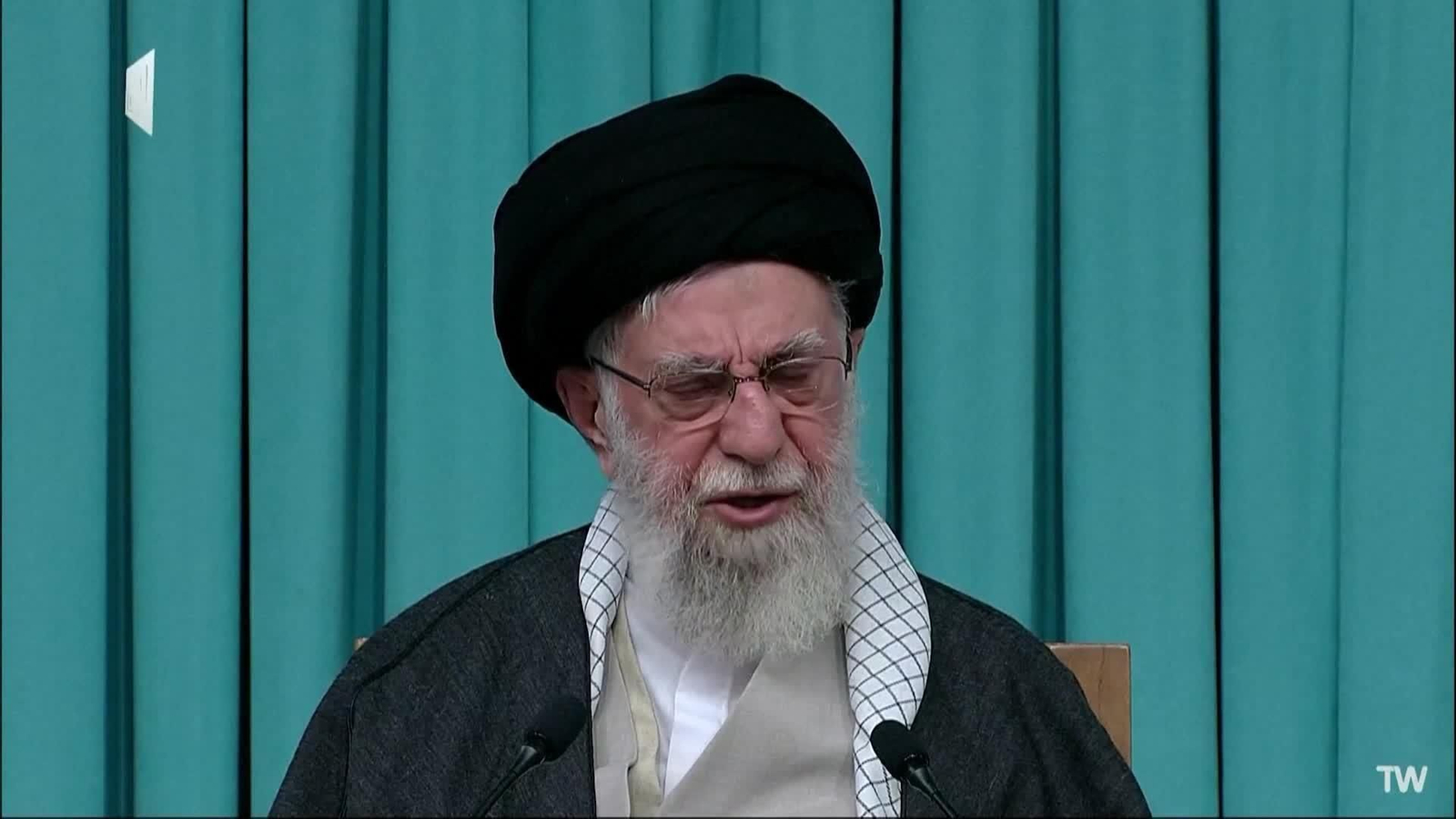
Iran's Supreme Leader Ayatollah Ali Khamenei said on September 23 that negotiations with the United States would not serve Tehran's interests and would prove a "dead-end". In a recorded message, Khamenei also said Iran would not "surrender to pressure" regarding uranium enrichment and he reiterated Tehran's long-standing official position that it does not need nuclear weapons and has no intention of producing them.
TEHRAN, IRAN (SEPTEMBER 23, 2025) (IRIB via WANA - No use BBC Persian. No use VOA Persian. No use Manoto. No use Iran International. No use Radio Farda)
66. (SOUNDBITE) (Farsi) IRANIAN SUPREME LEADER, AYATOLLAH ALI KHAMENEI, SAYING:
"We have not surrendered, and we will not. In this matter, or in any other, we have not yielded to pressure and we will not."
U.S. President Donald Trump on January 4 warned Iran of a strong response if security forces escalate violence against protesters in the Middle Eastern nation.
“We’re watching it very closely. If they start killing people like they have in the past, I think they’re going to get hit very hard by the United States,” Trump told reporters when asked about the unrest in Iran.
IN AIR (JANUARY 4, 2026) (U.S. NETWORK POOL - No use USA)
67. (SOUNDBITE) (English) U.S. PRESIDENT, DONALD TRUMP, SAYING:
JOURNALIST ASKING: "If they start killing people like they have in the past, I think they're going to get hit very hard by the United States.”