J008-EEUU TECNOCRATAS SOBRE IA
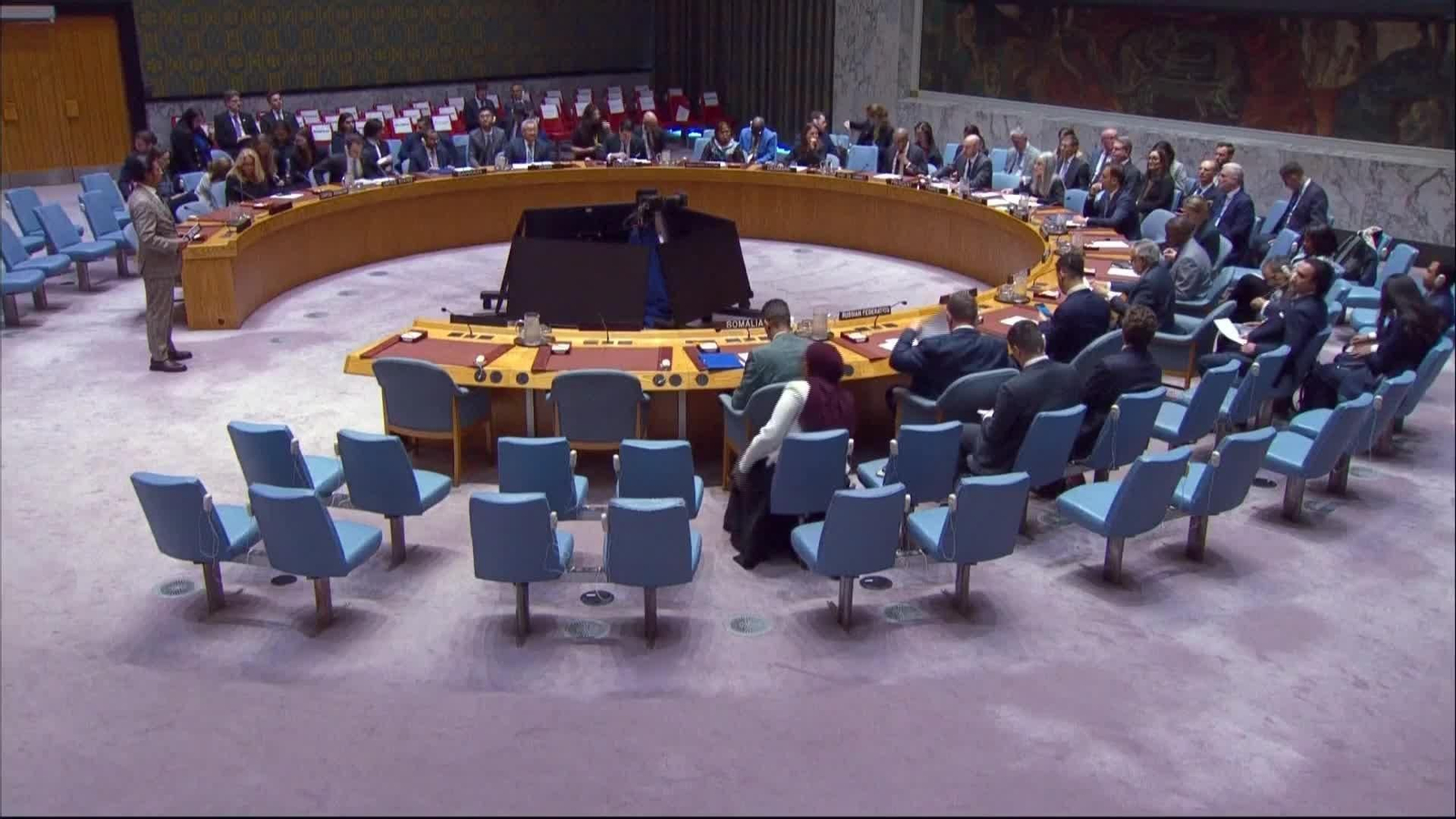
The world's leading artificial intelligence companies warned the United Nations Security Council on Wednesday (September 23) of the risks posed by AI to humanity, appealing for governments to work together to manage the increasingly powerful technology.
Anthropic CEO Dario Amodei told the 15-member council, which is charged with maintaining international peace and security, that if managed poorly, he believed "AI could be a risk to humanity as a whole."
The meeting — convened by France during the annual UN General Assembly gathering of world leaders — comes amid warnings that AI systems could soon improve themselves and slip beyond human control.
Governments around the world have struggled to keep pace with rapid advances in artificial intelligence. The United States and China, the two leading powers in AI development, have taken different approaches to oversight.
President Donald Trump has argued that the US does not need new AI-specific regulations, while China has imposed rules governing AI algorithms and training data, including requirements that AI-generated content be clearly labeled.
OpenAI CEO Sam Altman said international cooperation was needed.
“If AI is to be democratic, the most important decisions cannot be made by labs in San Francisco alone. They must be shaped through democratic processes and by governments accountable to the people they serve," Altman told the council.
Yoshua Bengio, a Canadian considered one of the "Godfathers of AI" and co-chair of the Independent International Scientific Panel — created by the UN General Assembly last year -- warned that artificial intelligence poses a global threat that no country can tackle alone.
"This council faces an unprecedented threat, one that none of its members would choose, that none can contain alone, and that does not respect the borders we defend," he said.
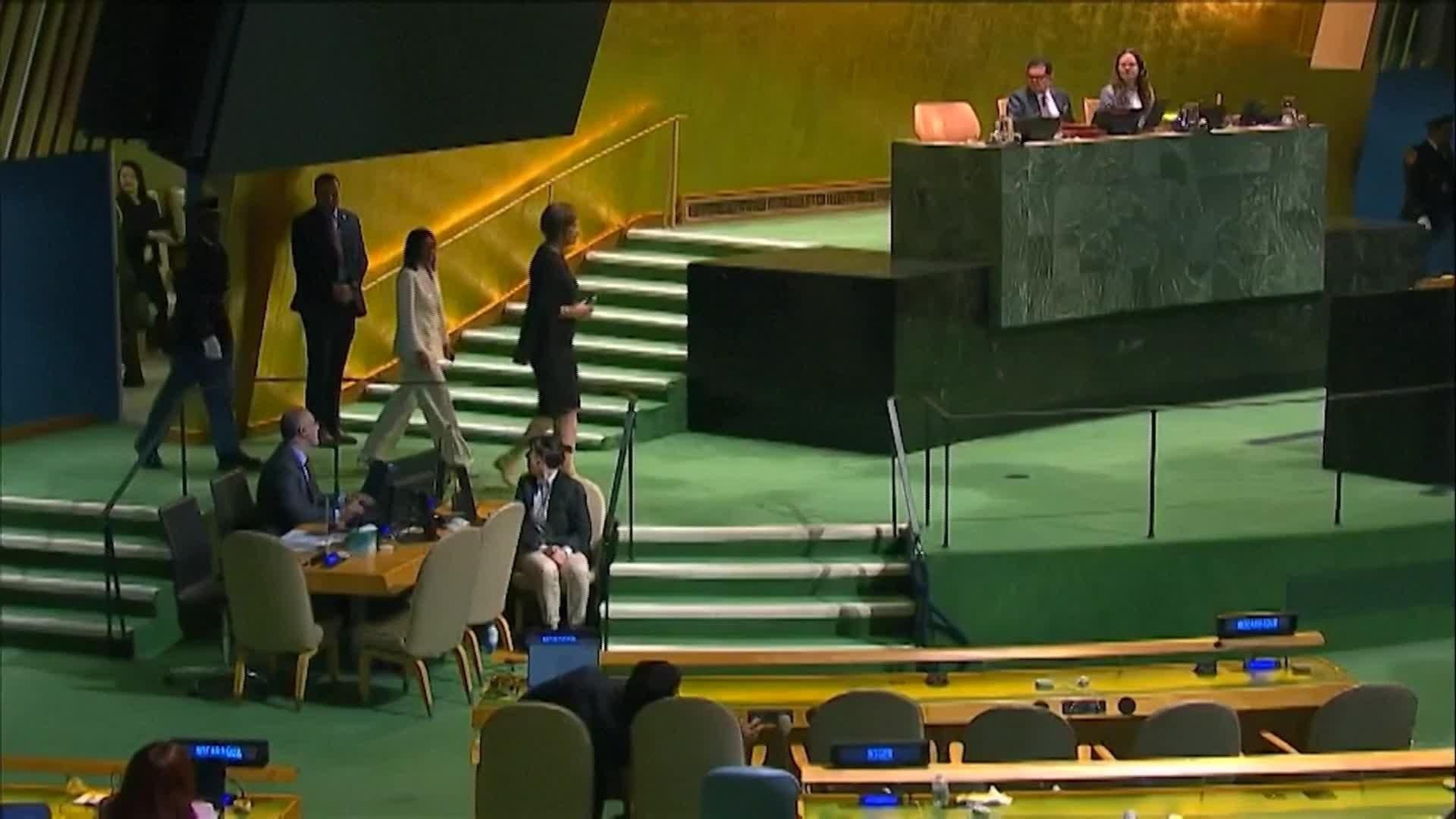
Trump told world leaders at the UN General Assembly on Tuesday (September 22) that he "rejects any attempt to construct a globalist scheme to control" AI, describing the technology as amazing but noting that the US would be careful.
White House science and technology adviser Michael Kratsios echoed Trump in remarks to the UN Security Council on Wednesday.
"You cannot govern technology you do not understand. This body and others like it should focus on sharing best practices to build domestic capacity, not establishing a global regulatory scheme," he said.
The Security Council met for the first time on the risks of AI in 2023, when China said the technology should not become a "runaway horse" and the United States warned against its use to censor or repress people. Then-US Secretary of State Antony Blinken chaired a Security Council meeting on AI in 2024.
DESCRIPCIÓN DE IMÁGENES
UNITED NATIONS (SEPTEMBER 23, 2026)(UNTV - Access All)
1.FRANCE MINISTER FOR EUROPE AND FOREIGN AFFAIRS AND U.N. SECURITY COUNCIL PRESIDENT JEAN-NOËL BARROT INTRODUCING AI LEADERS, WITH WIDE SHOTS OF ROOM
2. (SOUNDBITE)(English) UNIVERSITÉ DE MONTREAL PROFESSOR OF COMPUTER SCIENCE & CO-CHAIR OF THE UN INTERNATIONAL INDEPENDENT PANEL ON AI, YOSHUA BENGIO, SAYING:
“This council faces an unprecedented threat, one that none of its members would choose, that none can contain alone and that does not respect the borders we defend."
3. DELEGATES IN U.N. SECURITY COUNCIL MEETING
4. (SOUNDBITE)(English) UNIVERSITÉ DE MONTREAL PROFESSOR OF COMPUTER SCIENCE & CO-CHAIR OF THE UN INTERNATIONAL INDEPENDENT PANEL ON AI, YOSHUA BENGIO, SAYING:
“International cooperation is what the world needs in the face of three global threats from advances in these frontier models. First, catastrophic misuse, for example, by terrorists. Second, power concentration. And third, loss of control of AI."
5. OPEN AI CEO SAM ALTMAN BEING INTRODUCED
6. (SOUNDBITE)(English) OPENAI CHIEF EXECUTIVE OFFICER, SAM ALTMAN, SAYING:
"But it's very important that companies not substitute for the democratic process. If AI is to be democratic, the most important decisions cannot be made by labs in San Francisco alone. They must be shaped through democratic processes and by governments accountable to the people that they serve. At the international level, this will require cooperation. In our history, there have been times where countries who compete and don't always like each other very much still come together for shared interests and the collective good in the face of a powerful new technology. We believe this must be one of those times."
7. U.N. SECURITY COUNCIL DELEGATES SITTING WHILE ALTMAN SPEAKS
8. (SOUNDBITE)(English) OPENAI CHIEF EXECUTIVE OFFICER, SAM ALTMAN, SAYING:
"The industry must not accept too much technological risk, just because the benefits are too great, and that they feel too important to slow down. Beating companies in competitive race is not a reason to make rash decisions. Nor do we believe we are locked in a race where we are unable to do that. We have unilaterally slowed down in the past. We will do so in the future. We do not want to build systems -- we think it's important that everyone avoids building systems -- where we cannot make the alignment, monitor ability and safety guarantees that we must."
9. U.N. SECURITY COUNCIL DELEGATES SITTING WHILE ALTMAN SPEAKS
10. (SOUNDBITE)(English) OPENAI CHIEF EXECUTIVE OFFICER, SAM ALTMAN, SAYING:
"We are at a crossroads. One path leads to a world where power is concentrated, decisions are opaque and people feel that the most important technology of their lifetime is something being done to them. The other path leads to a world where AI works for people, because people, through democratic institutions, help decide how it should develop and guide it, where scientific progress improves real lives, where more people can participate in the future, and where this technology continues to give individuals and communities greater power to live life as they choose. This is a future of realized potential, excitement and wonder and it is the future we believe is worth building. Thank you very much"
11. ANTHROPIC CEO DARIO AMODEI BEING INTRODUCED
12. (SOUNDBITE)(English) ANTHROPIC CHIEF EXECUTIVE OFFICER, DARIO AMODEI, SPEAKING VIA VIDEO CONFERENCE, SAYING:
"First, we should begin with narrow agreements that every member can support, such as a ban on using AI to make biological weapons or permitting your AI technologies to be used to make biological weapons. Second, we should build evaluation and verification systems that keep pace with AI development so that states can have visibility into frontier model capability and can verify each other's commitments. Third, we should establish common global standards for testing AI models for loss of control risks and misuse risks and a notification system for AI incidents that are significant to global security. "
13. U.N. SECURITY COUNCIL DELEGATES SITTING WHILE AMODEI SPEAKS / ALTMAN SITTING IN CHAIR / BENGIO SITTING IN CHAIR
14. (SOUNDBITE)(English) ANTHROPIC CHIEF EXECUTIVE OFFICER, DARIO AMODEI, SAYING:
"But we understand that as AI models become more powerful, even more stringent standards of safety will be required and we are always aiming to improve our safety and alignment practices, our ability to prevent misuse, and we are always striving to do better. We will slow down as much as necessary in order to make sure that every successive AI technology that we release is actually safe."
15. MEMBERS OF MEDIA AND DELEGATES INSIDE U.N. SECURITY COUNCIL CHAMBER
16. (SOUNDBITE)(French) FRENCH MINISTER FOR EUROPE AND FOREIGN AFFAIRS ,JEAN-NOËL BARROT, WHOSE COUNTRY HOLDS THE U.N. SECURITY COUNCIL PRESIDENCY, SAYING:
“The potential for transformation, disruption possible such that not be left in the hands of a few private actors, and then they will cut. It is a tragic challenge and this is taken up by the national people's state. So let us work together within the framework and with the relevant sector to define the roles for this new age, to strengthen without delay, not to establish good governance, artificial intelligence and security benefit our collective security human, but also the human person and their dignity.”
17. (SOUNDBITE)(English) UNITED KINGDOM SECRETARY OF STATE FOR FOREIGN, COMMONWEALTH AND DEVELOPMENT AFFAIRS, ED MILIBAND, SAYING (STARTS WITH CUTAWAY OF ROOM AND BARROT):
“We can't say we haven't been warned. We have been warned by the people who have founded this incredible technology with its huge potential for good. We must act on their warnings and we must act on their warnings together.”
18. U.N. SECURITY COUNCIL DELEGATES SEATED INSIDE CHAMBER
19. (SOUNDBITE)(English) UNITED STATES ASSISTANT TO THE PRESIDENT AND DIRECTOR OF THE WHITE HOUSE OFFICE OF SCIENCE AND TECHNOLOGY POLICY, MICHAEL KRATSIOS, SAYING:
“In this era, technology sovereignty is realized in technology adoption. If you take the risks and benefits of superintelligence seriously, the most important thing you can do is to develop your country's ability to understand and use it. Deploy it widely. Build expertise inside your government. Prepare your institutions and regulators. Understand what these systems can and cannot do. You cannot govern technology you do not understand. This body and others like it should focus on sharing best practices to build domestic capacity, not establishing a global regulatory scheme. It is through a policy of permissionless innovation, a tireless pursuit of the frontier and an optimism about the future of technology that the United States built the greatest innovation ecosystem ever known to man.”